
Ecommerce operators
Turn product briefs, seasonal campaigns, and catalog requirements into product scenes, banner drafts, and testable visual directions.
Useful for listing images, homepage banners, promo tiles, and product detail page concepts.
GPT Image 2 AI Generator
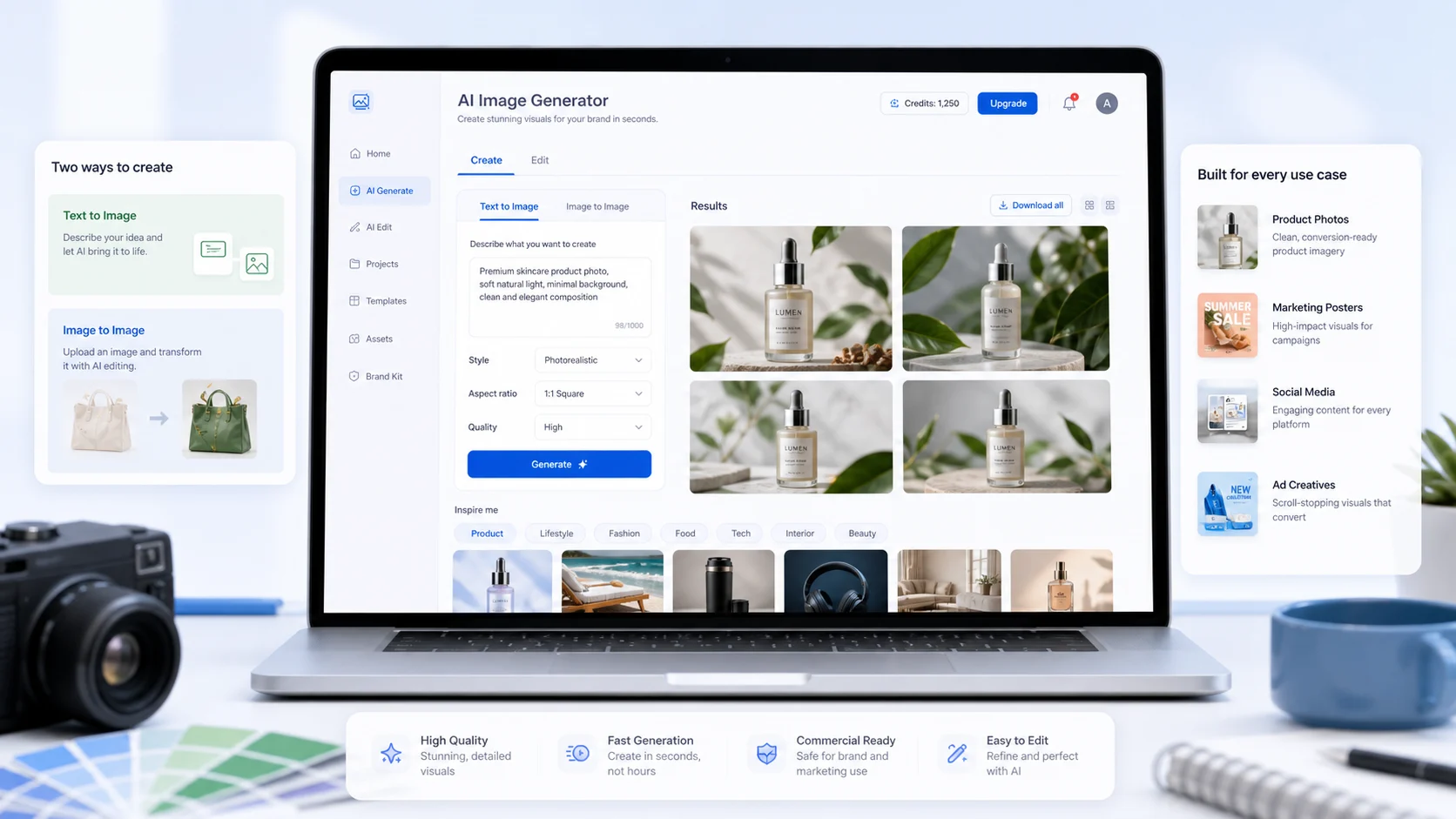
Use prompt-to-image and reference-aware editing workflows to draft ecommerce visuals, campaign concepts, social creatives, and practical image variations for review.
Who it helps
A high-intent GPT Image 2 AI generator page should do more than show examples. It should help visitors understand where the workflow fits, what to write in a prompt, how to judge output quality, and when it makes sense to upgrade for more credits.
Turn product briefs, seasonal campaigns, and catalog requirements into product scenes, banner drafts, and testable visual directions.
Useful for listing images, homepage banners, promo tiles, and product detail page concepts.
Generate practical ad concepts, poster directions, email header visuals, and social creative variants before spending design time.
Useful for campaign planning, paid social tests, launch visuals, and landing page creative exploration.
Create thumbnails, covers, social posts, and reference boards with a workflow that stays simple enough for daily use.
Useful for content calendars, creator assets, founder-led marketing, and lightweight brand experiments.
Generator capabilities
The page is designed around repeatable creative production: define the task, give the model constraints, compare variations, and refine only what needs correction.
Start from a prompt that defines the subject, environment, composition, style, and output format.
Use reference details when a product, color direction, layout, or visual identity needs to stay recognizable.
Prompt for headline space, clean backgrounds, platform ratios, and campaign context so outputs are easier to review.
Improve results by isolating one visible issue at a time: lighting, crop, text area, subject size, or background detail.
Workflow
Most weak outputs start with vague instructions. This workflow makes each request specific enough for product, marketing, and creator use cases.
Decide whether the image needs to sell a product, explain an offer, support a social post, or explore a design direction.
Use a prompt that describes subject, scene, camera angle, lighting, style, and constraints instead of only naming an object.
For product shots or brand visuals, add reference-image details and specify what should remain stable across variations.
Pick the strongest output, then run focused revisions for visible problems rather than rewriting the entire prompt.
Prompt examples
Strong prompts define the visual task, audience, layout, and constraints. They do not need to be long, but they need to be specific enough to review.
Create a clean ecommerce hero image for a white running shoe on a pale blue studio background, soft shadow, centered product, clear empty space on the right for a headline, realistic texture, 16:9.
Why it works
This prompt tells the model the product, background, composition, commercial use, and exact layout requirement.
Design a launch poster concept for a productivity app, modern desk scene, blue and green accents, readable headline area at the top, professional but friendly tone, square format.
Why it works
It works because the visual purpose is explicit and the prompt protects the headline area before design review.
Generate three visual directions for a summer skincare social post, bright bathroom counter, natural light, product in foreground, subtle botanical details, clean background, 4:5 format.
Why it works
The prompt defines a real social placement, a product focus, the lighting, and a practical aspect ratio.
Use the uploaded product reference as the hero item. Place it on a warm neutral studio surface, preserve the bottle shape and label direction, add soft natural shadow, leave clean space for price copy.
Why it works
Reference-aware prompts are stronger when they state what must stay stable and what can change around it.
Prompt quality
The fastest improvement is not a longer prompt. It is a clearer prompt that names the image job, layout, and what must stay stable.
Output review
AI image generation is fastest when review criteria are clear. Use this checklist before sending an image to an ad, store page, blog post, or client review.
Generate or upgrade
Use the homepage generator for first tests. If you need more production runs, compare plans and credits before moving into Stripe checkout.
Billing and cancellation support: [email protected]
FAQ
This page is built for people who want a practical browser-based GPT Image 2 AI workflow for image generation, image editing, product visuals, and marketing creative. It explains how to move from a prompt or reference image to a usable visual direction.
Yes. The workflow is focused on product listing visuals, ecommerce banners, posters, social creatives, thumbnails, and campaign drafts. You should still review every output for brand fit, text accuracy, and publishing requirements.
Include the subject, use case, background, lighting, camera angle, output ratio, and constraints such as empty headline space or preserved product identity. Short prompts can work when they are specific.
Use a reference image when product shape, color, label direction, character identity, or existing layout needs to stay consistent. The prompt should also state which details can change.
No. This landing page is intentionally built around practical image work: product shots, posters, social media images, ad concepts, landing page visuals, and reference-based edits.
Start with generation and editing tests, then compare pricing when you need more production runs, more variations, or a higher-volume workflow. Pricing and checkout are handled from the main site pricing section.
Review outputs before publishing. Check product accuracy, text readability, platform rules, brand safety, and any legal or commercial-use requirements for your project.
For billing, cancellation, or plan questions, contact [email protected] and include your account email plus order context.
Related links