JSON 프롬프트 구조, 변수, 레이아웃 제약, 실패 디버깅, 반복 로그로 GPT Image 2 출력 안정성을 높이는 실전 가이드.
Stable AI images rarely come from one lucky sentence. They come from a reusable structure: define the job, lock the variables, constrain the layout, debug failures, and record iterations.
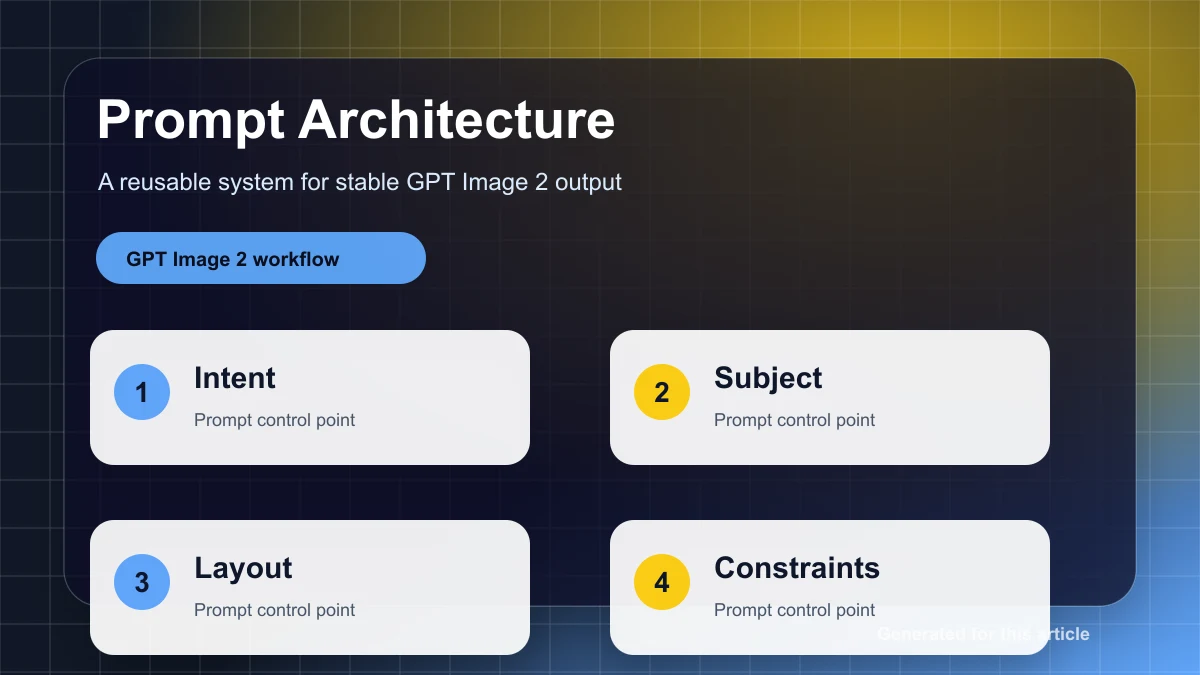
Use a five-layer prompt architecture
A loose paragraph forces the model to guess priorities. A stable prompt separates the job, inputs, layout, style, and QA rules. The team changes variables while the structure stays the same, so outputs become easier to compare and reuse.
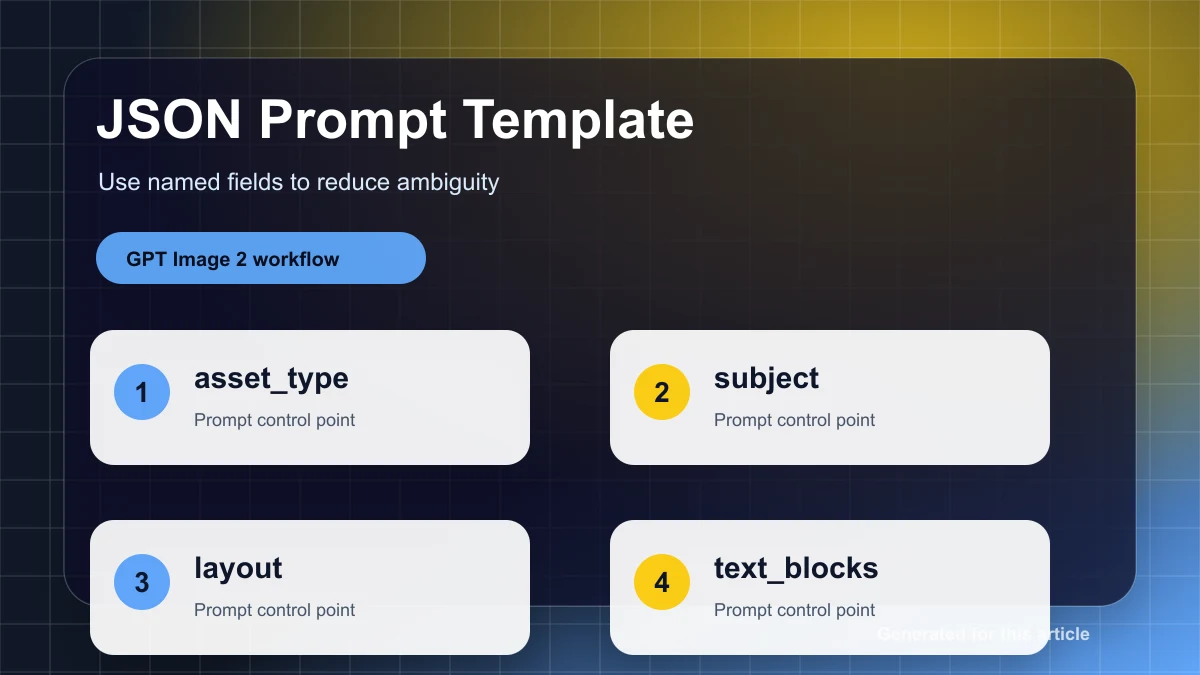
{
  "job": "create a product hero image for a landing page",
  "inputs": {
    "product_name": "{{product_name}}",
    "audience": "{{target_customer}}",
    "offer": "{{offer}}",
    "language": "{{language}}"
  },
  "layout": {
    "aspect_ratio": "{{aspect_ratio}}",
    "focal_point": "product centered, headline above",
    "negative_space": "clear right side for CTA and proof badge"
  },
  "style": {
    "lighting": "soft commercial studio light",
    "palette": "{{brand_palette}}",
    "finish": "premium, realistic, clean edges"
  },
  "text_rules": {
    "headline": "{{headline}}",
    "max_words": 6,
    "must_be_readable": true
  },
  "qa": [
    "product identity preserved",
    "headline readable at mobile size",
    "no fake logo or random text",
    "layout can be reused for the next campaign"
  ]
}
Turn risky details into variables
Product names, offers, dates, languages, brand colors, and aspect ratios are easy to damage inside a long prompt. Put them in a variable table first, review the table, then generate. This is faster than hunting for mistakes in a 300-word prompt.
| Variable | Use | Rule |
|---|---|---|
{{product_name}} | product or service name | exact spelling only |
{{headline}} | visible title text | short, no paraphrase |
{{brand_palette}} | visual consistency | use approved colors |
{{aspect_ratio}} | channel output | one ratio per run |
{{negative_space}} | design space | specify side and purpose |
Debug failures by category
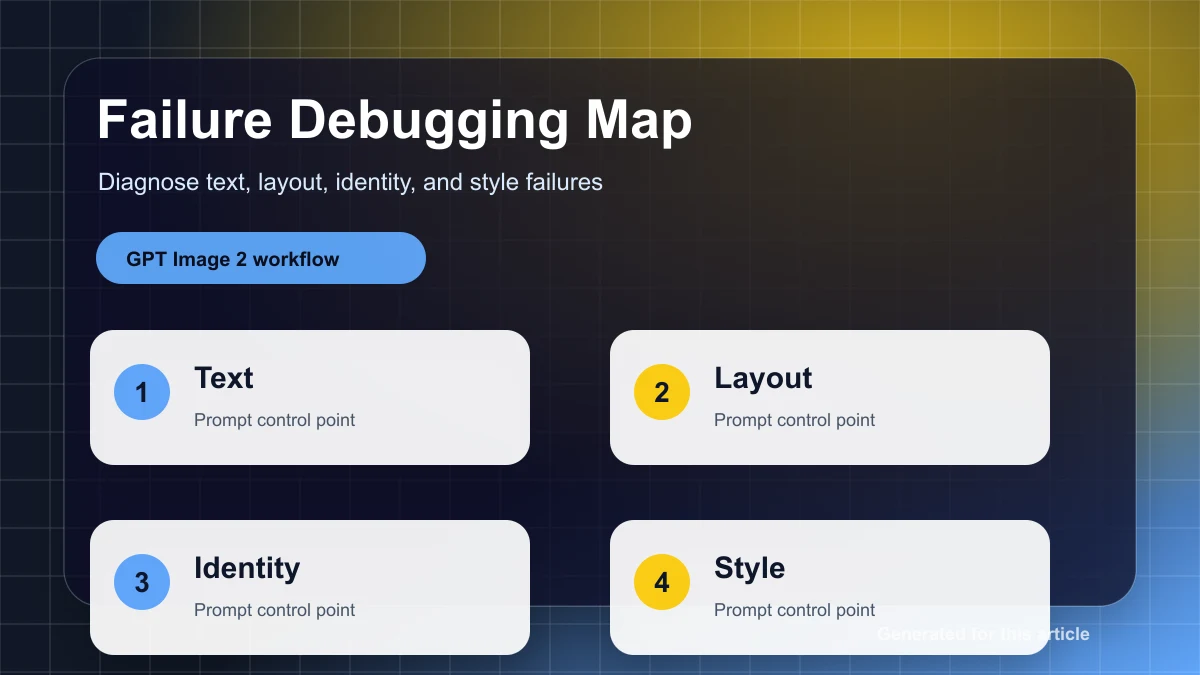
Do not fix images with vague instructions like make it better. Classify the failure first. Product drift needs stronger reference preservation. Layout drift needs a stricter focal point and negative space rule. Text failure needs shorter copy. Over-styling needs fewer adjectives. Clutter needs fewer jobs in the same image.
Keep an iteration log
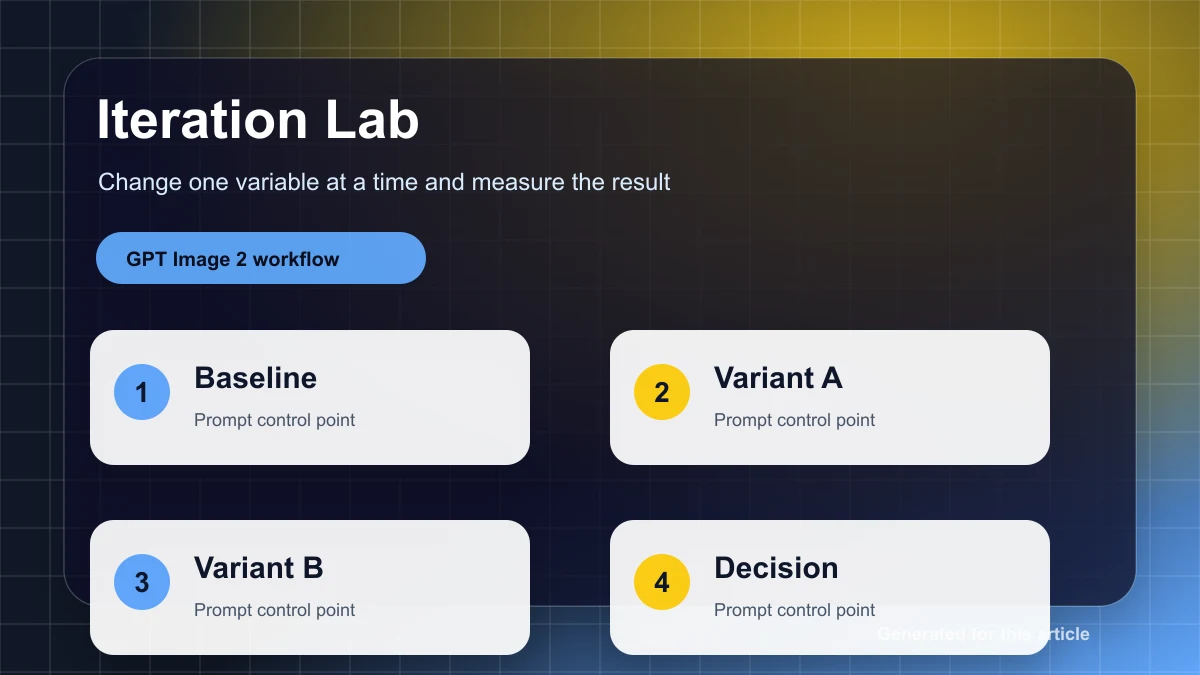
Iteration log
V1 goal: [what the prompt tried to do]
Problem: [what failed visibly]
Change: [one prompt change only]
Keep: [what must not change from the best result]
Decision: [ship / revise / discard]
Change one thing at a time. If you change angle, background, copy, and style together, you cannot tell which change helped. Stable output comes from observable iteration, not from stuffing more instructions into the prompt.
Use gpt-image2ai.net to apply this prompt architecture to posters, product images, social creatives, and multilingual campaign assets.